
Engineered Vinyl Plank vs. Solid Hardwood: Durability, Cost, and Waterproofing Compared
Updated: Aug 23
Choosing the right flooring for your home or commercial space is one of the most important decisions you'll make—and one of the most lasting. Two of the most popular options on the market today are Engineered Vinyl Plank (EVP) and Solid Hardwood.

Both deliver stunning aesthetics and solid underfoot performance, but they differ significantly when it comes to durability, cost, and waterproofing. At Olson Floor Supply, we help homeowners and contractors navigate these choices every day. Here's a comprehensive breakdown to help you decide which flooring best fits your lifestyle and budget.
What Is Engineered Vinyl Plank?
Engineered Vinyl Plank is a multi-layer synthetic flooring product designed to mimic the look and feel of real wood. It typically consists of a rigid core (often WPC or SPC), a photographic design layer that replicates natural wood grain, and a protective wear layer on top.

EVP has exploded in popularity over the last decade, and for good reason—it delivers a high-end appearance without many of the drawbacks associated with traditional wood flooring.
What Is Solid Hardwood?
Solid Hardwood is exactly what it sounds like—planks milled from a single piece of natural wood, such as oak, maple, hickory, or walnut.

It has been a staple of high-end residential flooring for centuries and is prized for its authentic warmth, timeless beauty, and ability to be refinished multiple times over its lifespan. However, it comes with specific installation requirements and maintenance considerations that make it less flexible than modern alternatives.
Durability: Which Flooring Holds Up Better?
Engineered Vinyl Plank
Engineered Vinyl Plank is engineered for tough, everyday conditions. Its wear layer—typically measured in mils—protects against scratches, dents, and stains. Premium EVP products feature a wear layer of 20 mils or more, making them highly resistant to pet claws, heavy foot traffic, and dropped objects. The rigid core also provides excellent dimensional stability, meaning it won't expand or contract dramatically with temperature and humidity changes.
Solid Hardwood
Solid Hardwood is undeniably durable in its own right, but it has a significant vulnerability: it reacts to moisture and humidity. Fluctuations in indoor climate can cause hardwood to expand, contract, warp, or cup over time. While it can be sanded and refinished multiple times—extending its life to 50–100 years or more—it requires more careful maintenance and climate control to perform at its best.

Verdict: For high-traffic areas, households with children or pets, and spaces prone to humidity, Engineered Vinyl Plank generally wins on day-to-day durability. Solid Hardwood excels in longevity when properly maintained in stable environments.
Cost: What's the Real Investment?
Cost is one of the biggest deciding factors for most buyers. Engineered Vinyl Plank typically ranges from $2 to $7 per square foot for materials, with installation often adding $1–$3 per square foot depending on your region. Its click-lock installation system makes it DIY-friendly, which can dramatically reduce labor costs.
Solid Hardwood flooring, on the other hand, generally runs $5 to $15 or more per square foot for materials alone. Installation is more complex—requiring nailing or gluing—and typically adds $3–$8 per square foot in labor. Additionally, solid hardwood needs acclimation time before installation and may require subfloor preparation.
Over the long term, Solid Hardwood's ability to be refinished can offset its higher upfront cost. EVP, while more affordable initially, may need full replacement after 15–25 years rather than refinishing. The right choice depends on your timeline and budget priorities.
Waterproofing: A Clear Winner
This is where the two flooring types diverge most dramatically. Engineered Vinyl Plank is 100% waterproof. Its synthetic construction means spills, pet accidents, and even minor flooding won't damage the planks themselves. This makes EVP ideal for kitchens, bathrooms, laundry rooms, basements, and any other moisture-prone space.
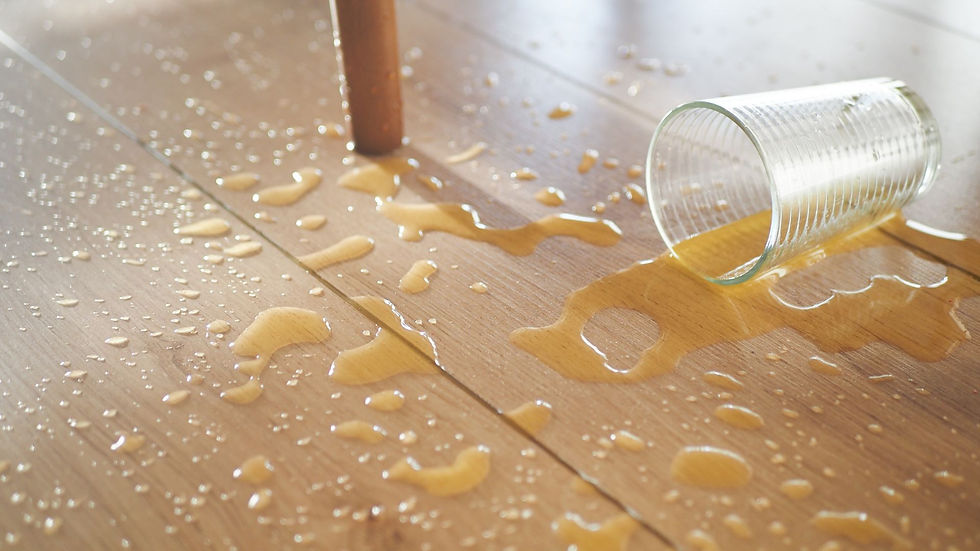
Solid Hardwood, by contrast, is not waterproof. Even surface-sealed hardwood is susceptible to moisture damage if water is left standing. Prolonged exposure can lead to warping, swelling, and mold growth beneath the planks. For this reason, solid hardwood is generally not recommended for bathrooms, basements, or kitchens with heavy water exposure.
Verdict: If waterproofing is a priority, Engineered Vinyl Plank is the clear choice. Solid Hardwood is best reserved for dry, climate-controlled environments where moisture is not a concern.
Final Thoughts
Both Engineered Vinyl Plank and Solid Hardwood have their place in the world of flooring—and the best choice ultimately comes down to your specific needs, your space, and your budget. EVP offers unmatched waterproofing, easy installation, and lower upfront costs, making it a top pick for modern households. Solid hardwood brings irreplaceable natural beauty, a sense of permanence, and exceptional long-term value when maintained properly.
At Olson Floor Supply, we carry a wide selection of both flooring types to suit every taste and budget. Whether you're leaning toward the low-maintenance appeal of EVP or the timeless elegance of solid hardwood, our flooring experts are here to guide you every step of the way. Visit us in-store or browse our collection online to find the perfect floor for your home.


Comments